 Japanease
 English














January 9, 2026
Dip Coater Application Report: Zeolite Crystal Coating on Porous Alumina Tubular Substrates
Matsukata Lab, Dept. of Applied Chemistry, School of Advanced Science and Engineering, Waseda University
Motomu Sakai
1. INTRODUCTION
Zeolites are a general term for porous aluminosilicates and have long been utilized as catalysts and adsorbents due to their unique properties; in recent years, they have also attracted significant attention as separation membrane materials. Because the zeolite membrane itself is very thin—ranging from several hundred nanometers to several tens of micrometers—it is synthesized on a porous substrate to ensure mechanical strength. To take full advantage of zeolite's heat and chemical resistance, porous ceramics such as alumina, silica, and mullite are commonly employed as substrate materials. Generally, zeolite separation membranes are prepared by a method called "secondary growth," in which small crystals termed seed crystals are supported on the substrate and subsequently grown under hydrothermal conditions. In this process, achieving a uniform loading of seed crystals across the substrate is crucial for obtaining high-performance separation membranes. If the seeding state is non-uniform, gaps (pinholes or cracks) remain between crystals after film synthesis, causing severe performance degradation.
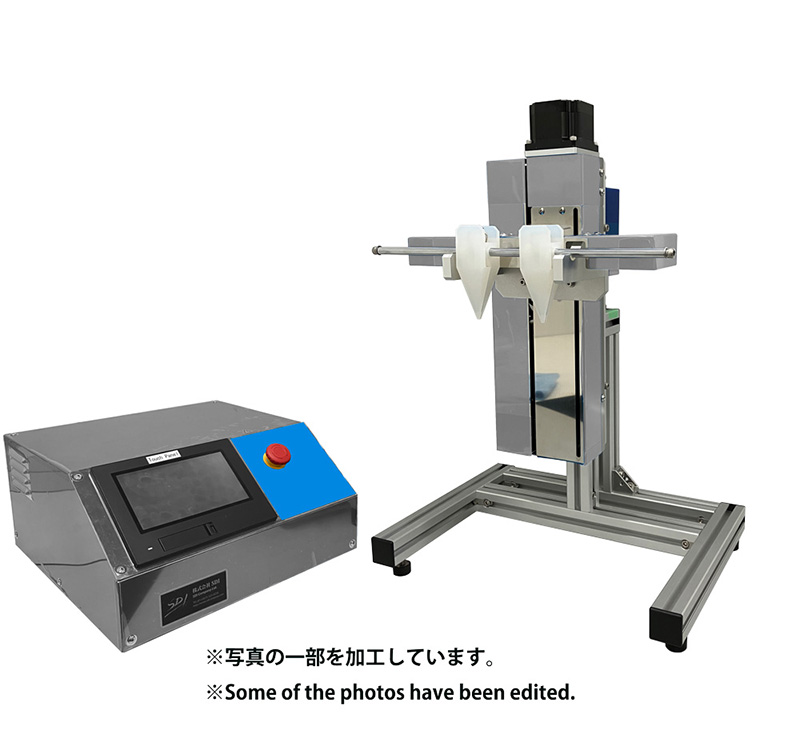
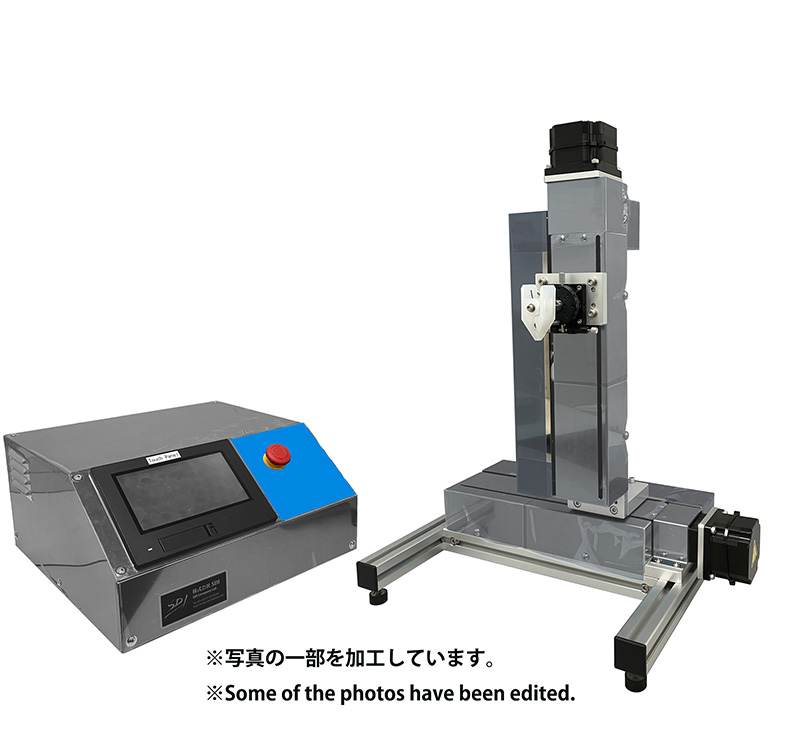
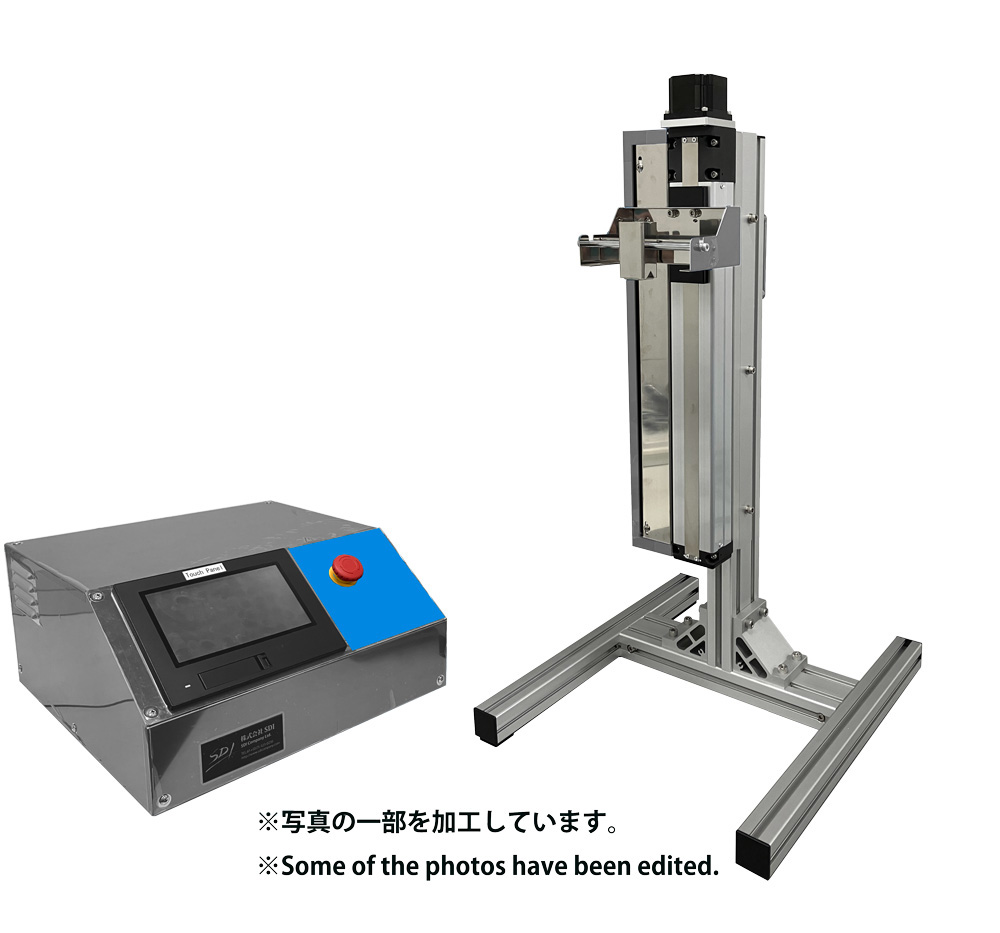
Although various seed crystal loading techniques have been proposed to date, dip coating is widely used due to its simplicity. In this report, we describe the results of loading zeolite seed crystals onto porous alumina substrates using the portable dip coater DT-0001-N1.
2. EXPERIMENTAL METHOD
A slurry consisting of zeolite crystals dispersed in water was used as the coating liquid. The loading behavior was investigated using multiple coating liquids containing zeolite crystals with different particle sizes and morphologies.
Porous alumina tubular substrates (outer diameter: 12 mm, inner diameter: 9 mm, length: 30 mm) were used. The substrates were thoroughly dried after washing with water and acetone. In order to perform coating on multiple substrates simultaneously, a custom fixture shown in Figure 1 was fabricated and attached to the dip coater.
The dip coating condition was set to a withdrawal speed of 20mm/sec. The state of the supported seed crystals was evaluated by scanning electron microscopy (SEM) observation.
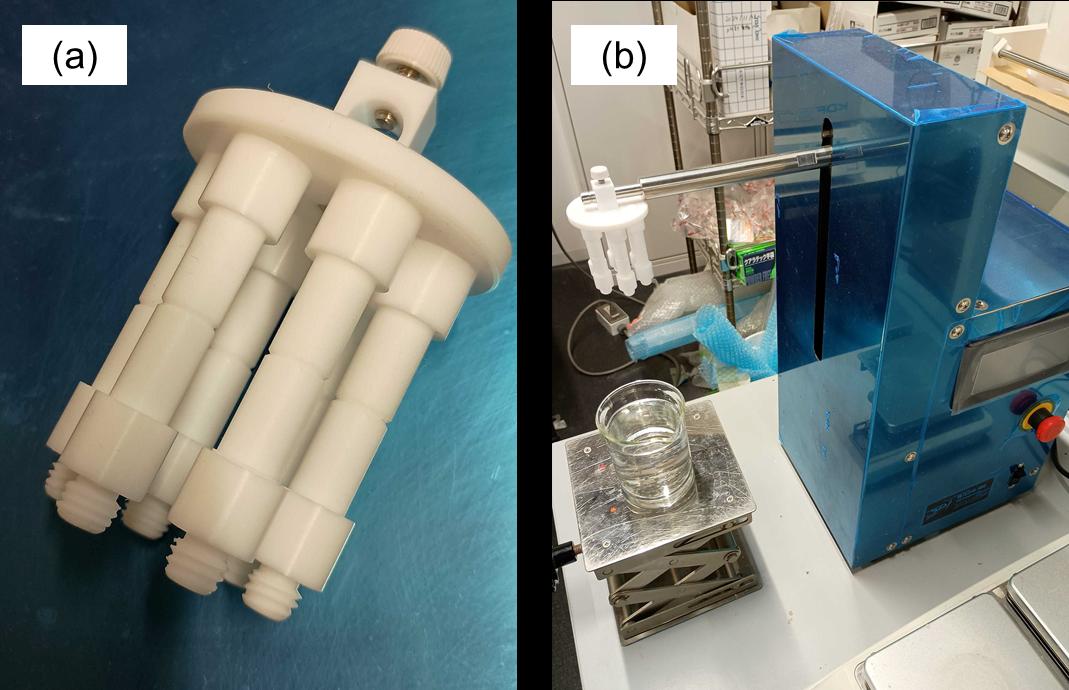
Figure 1. (a) Fixture for coating multiple substrates simultaneously and (b) view during operation.
3. RESULTS AND DISCUSSION
Figure 2 shows electron microscopy images of porous substrate surfaces supporting five types of zeolite crystals (Beta zeolite ①, Beta zeolite ②, MFI-type zeolite ①, MFI-type zeolite ②, and SZR-type zeolite). The particle sizes of the zeolite seed crystals used ranged from approximately 200 nm to several micrometers, with diverse morphologies including spherical, plate-like, and rod-like shapes. It was clearly observed that all types of zeolite crystals were uniformly supported on the substrates via dip coating.
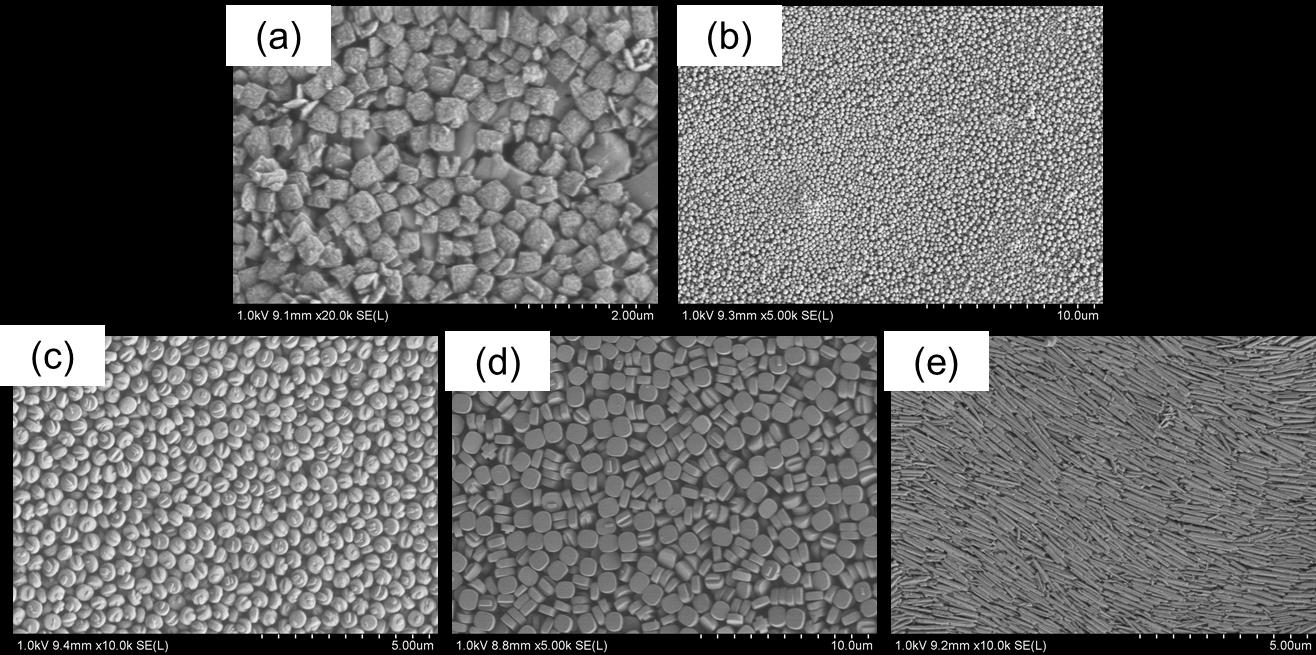
Figure 2. Loading behavior of various zeolite crystals by dip coating: (a) Beta zeolite ①, (b) Beta zeolite ②, (c) MFI-type zeolite ①, (d) MFI-type zeolite ②, and (e) SZR-type zeolite.
Figure 3 illustrates the cross-sectional state when varying the number of dip cycles using the MFI-type zeolite ① coating solution. The thickness of the supported seed crystal layer was examined by changing the number of dips to 2, 3, and 4 times. As a result, it became clear that the thickness of the supported layer increased almost linearly in proportion to the number of coating cycles. This indicates that the coating state (layer thickness and loaded amount) can be controlled via an extremely simple operation.
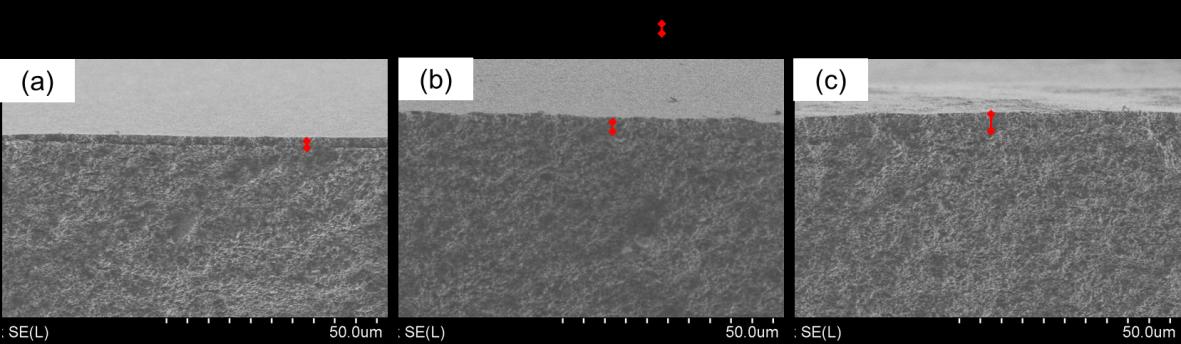
Figure 3. Loading state of MFI-type zeolite ① with varying coating cycles: (a) 2 dips, (b) 3 dips, and (c) 4 dips.
4. SUMMARY
Zeolite crystals were loaded onto porous alumina substrates using the portable dip coater DT-0001-N1. Using water as the dispersion medium, zeolite crystals of various sizes and shapes were uniformly deposited on the substrate surface. Furthermore, utilizing a self-fabricated fixture confirmed that simultaneous coating of multiple substrates is achievable. The thickness (loading amount) of the coating layer was widely controllable by adjusting the number of coating cycles.
5. REFERENCES
1) M. Sakai et al., A Review of Strategies for Developing Zeolite Membranes: From a Microstructure to a Membrane Module. Cryst. Growth Des. 25 (2025) 5584–5620.